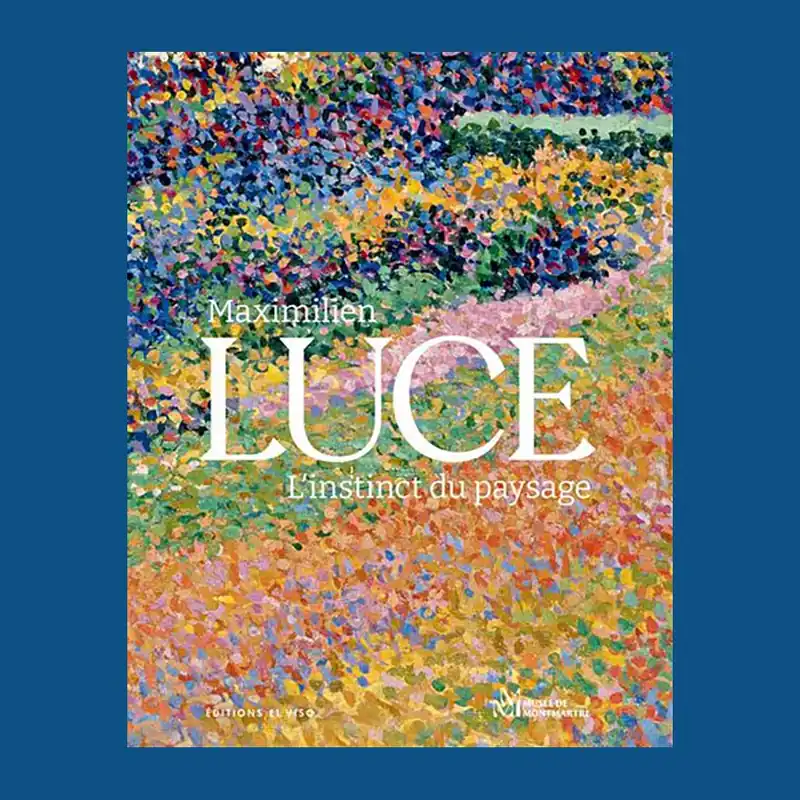

Pioneer of Neo-Impressionism and a cornerstone of anarchist and libertarian circles, Maximilien Luce (1858–1941) left a lasting mark on his time through his profound artistic and political commitments.
As a painter of urban and rural landscapes and the human condition, he captured the social and industrial transformations of his era. Beyond the humanistic quality that gives heart to his work and defines it as a whole, landscape is the other dominant theme that animates his painting throughout his life.
Luce captures light and color, revealing the beauty of landscapes with a unique sensitivity.
Maximilien Luce belonged to this pivotal generation, which experienced both the splendor of the Belle Epoque and social unrest, benefiting from numerous technical advances and suffering just as much at the time of the First World War. Deeply marked by the Paris Commune, which he witnessed as a young man when he was 13, Luce fought three wars and many social battles (against child prisons and colonization, in favor of workers’ strikes, for Dreyfus, etc.).
Above all, Luce’s rich historical period corresponded to a fantastic artistic ferment. The Luce comet joined the neo-Impressionist constellation formed by Georges Seurat, Paul Signac, Camille Pissarro and Henri-Edmond Cross at his first exhibition, at the Société des Artistes Indépendants in 1887. From then on, he took part in the post-impressionist adventure and contributed to the defense of artistic freedom, first as a member, then as vice-president and president of this society.
In 65 years of work, Maximilien Luce left a corpus of almost 4,000 paintings and as many drawings and prints compiling some of the key events of his era (major floods, mobilization, urban works, circuses, etc.).